





India’s overseas investment ambitions are increasingly colliding with a far more immediate macroeconomic concern: protecting the country’s external financial stability amid rising global uncertainty.
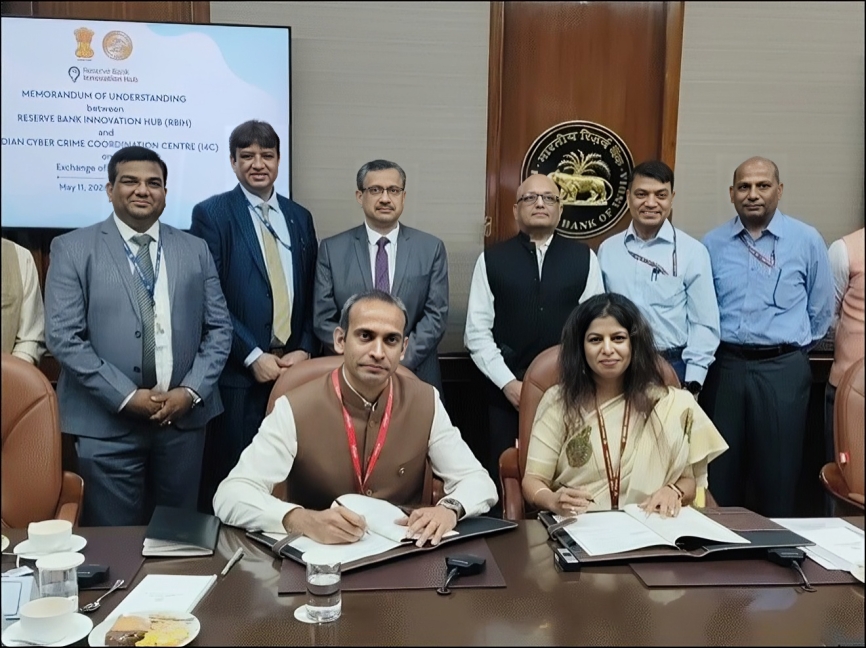
The Reserve Bank of India’s foreign exchange department has reportedly begun intensifying scrutiny of overseas direct investments (ODI) by Indian corporates after outward investment outflows surged sharply to nearly $27 billion in FY26, almost doubling from around $14.5 billion in FY24. Regulators are reportedly seeking greater clarity from companies on the commercial rationale, governance structures, end-use of funds and repatriation plans linked to foreign investments. The move comes at a sensitive moment for India’s external sector.
The Indian rupee has faced sustained depreciation pressure over the past year amid rising crude oil prices, geopolitical disruptions in West Asia, volatile capital flows and widening concerns around the current account deficit. While much of the discussion has focused on oil imports and foreign portfolio outflows, policymakers are increasingly examining another underappreciated pressure point: the growing scale of outbound capital deployment by Indian firms.
The concern is not that overseas investments are inherently negative. In many cases, they are strategically necessary. The larger issue is whether India can simultaneously finance aggressive global expansion by domestic corporates while also preserving sufficient domestic liquidity and foreign exchange resilience during periods of global stress.
Why ODI Is Rising So Rapidly
India Inc.’s outward investment story reflects the growing global ambitions of domestic companies. Indian firms are increasingly expanding into Southeast Asia, Africa, Europe and the Middle East to secure access to new markets, strategic resources, technologies and supply-chain capabilities. Overseas acquisitions have become particularly important in sectors such as pharmaceuticals, renewable energy, technology services, logistics and critical minerals.
Corporate investments abroad are also being driven by a structural shift in global manufacturing. As companies attempt to diversify supply chains away from concentrated geographies, Indian firms are using overseas subsidiaries and joint ventures to integrate themselves into global production networks. Access to advanced technology, established brands and local distribution ecosystems has become a key motivation behind outbound investments.
The government’s aggressive free trade agreement (FTA) push may accelerate this trend further.
Over the past three-and-a-half years, India has actively pursued trade agreements with nearly 38 developed economies and strategic partners, including deals with the UAE, Australia, EFTA nations and ongoing negotiations with the UK and European Union. These agreements aim to provide Indian goods preferential access to large global markets through lower import duties and improved trade terms.
At the same time, India’s exports have shown notable resilience despite global economic weakness. Combined merchandise and services exports reportedly crossed $863 billion this year, nearly 5% higher than the previous year despite slowing global demand and geopolitical disruptions.
For many Indian corporates, overseas expansion is therefore increasingly viewed not as optional diversification, but as a competitive necessity.
The RBI’s Concern: Growth vs Capital Drain
Yet the RBI’s growing caution reflects a broader macroeconomic reality. India remains heavily dependent on imported crude oil, gold and external capital flows. During periods of global instability, the country’s demand for dollars rises sharply while foreign capital often becomes more volatile. This creates direct pressure on the rupee and the balance of payments.
In such an environment, large-scale outward investments can intensify external stress if not accompanied by proportional export earnings, repatriation flows or domestic value creation.
Regulators appear particularly focused on whether some ODI structures are being used primarily for financial engineering, tax arbitrage or capital parking rather than genuine business expansion. Reports indicate that companies are being asked to justify jurisdiction choices, funding structures, governance arrangements and economic substance behind overseas entities. The scrutiny reflects a deeper policy dilemma.
India wants domestic companies to become global champions. But it also cannot afford unchecked hard-currency outflows at a time when external vulnerabilities are rising.
The Rupee Equation
The connection between ODI and the rupee is becoming increasingly important. India’s currency pressures are no longer being driven solely by temporary market volatility. They increasingly reflect structural tensions within the economy itself.
The country requires massive capital deployment to finance infrastructure, manufacturing expansion, energy transition and urbanisation over the next decade. Yet India’s financing architecture remains heavily bank-centric, while domestic bond markets are still relatively shallow.
At the same time, rising outward investments imply that a growing portion of Indian capital is being deployed overseas rather than within domestic productive ecosystems creates a difficult balancing act.
If outbound investments help Indian firms build export competitiveness, technology access and global scale, they may strengthen India’s long-term external position. But if large capital outflows occur without corresponding domestic value addition or export gains, they risk worsening pressure on liquidity and the currency during periods of external shock.
A Shift Toward “Strategic Capital Discipline”
The RBI’s recent actions suggest that policymakers are not attempting to discourage outward expansion entirely. Instead, they appear to be signalling a shift toward strategic capital discipline. This aligns with broader efforts already underway across the financial system.
The RBI has tightened oversight around banks’ forex exposures, strengthened monitoring of foreign exchange outflows and introduced measures aimed at stabilising rupee liquidity during volatile periods. Simultaneously, the government continues focusing on export diversification, manufacturing localisation and attracting longer-duration foreign investment into infrastructure and industrial sectors.
The larger objective is becoming clearer: reduce India’s vulnerability to external shocks while still supporting long-term global competitiveness. That balance will define the next phase of India’s economic evolution.
Because ultimately, the question is no longer whether Indian companies should expand globally. The real question is whether India’s financial architecture can support that expansion without weakening the domestic foundations needed to sustain growth, liquidity and currency stability during the next global crisis.