



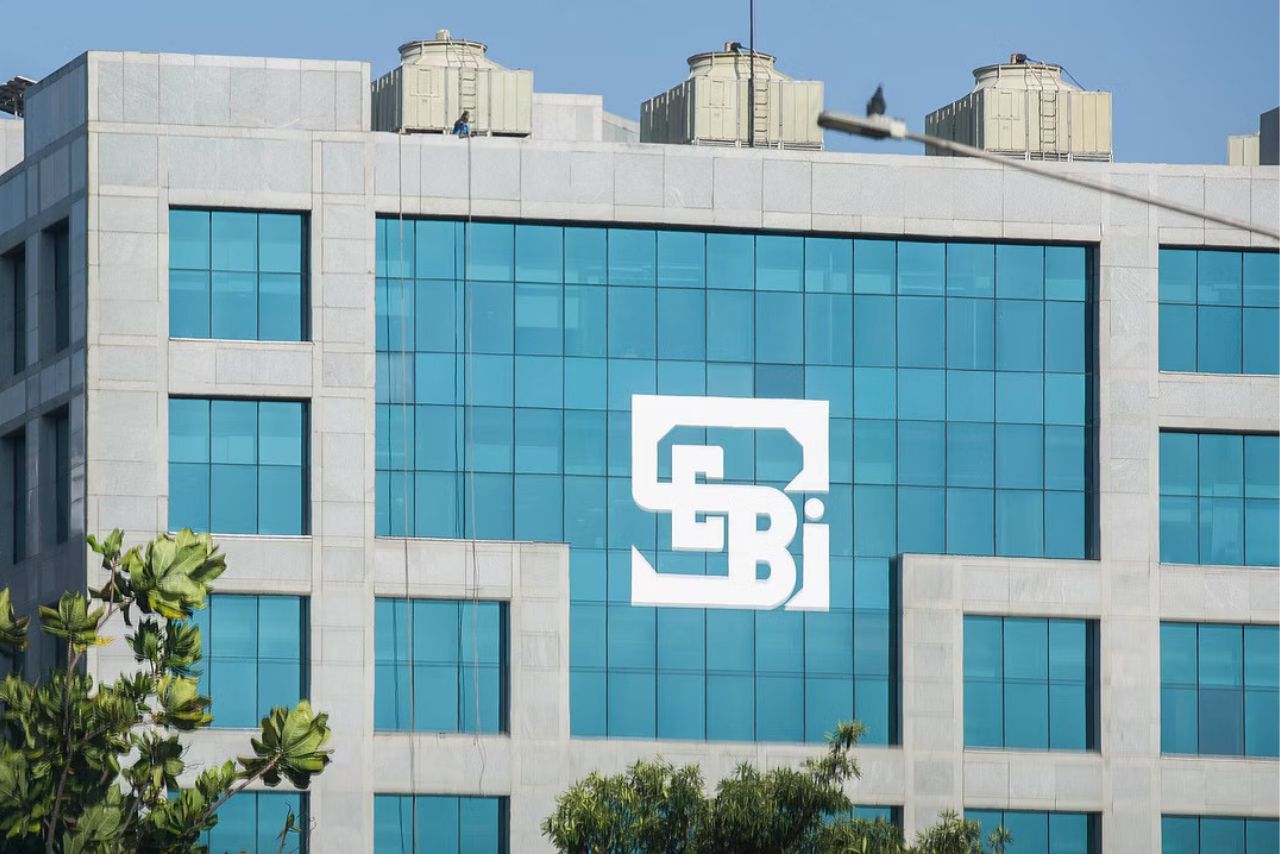
For years, cybersecurity conversations in financial institutions largely revolved around firewalls, phishing attacks, ransomware incidents and periodic compliance audits. Those discussions still matter, but the latest advisory issued by the Securities and Exchange Board of India suggests something far bigger is unfolding beneath the surface.
SEBI’s recent circular on emerging AI-driven vulnerability detection tools, including platforms similar to “Mythos”, is not just another compliance communication for CISOs and technology departments. It is one of the strongest signals yet that artificial intelligence is beginning to reshape the balance between cyber attackers and defenders and that the financial sector may be entering a very different kind of risk environment.
What makes this advisory important is not merely the mention of AI. It is the way SEBI frames the threat itself. The circular openly acknowledges that advanced AI systems can now identify vulnerabilities at unprecedented speed and scale, potentially exposing weaknesses across interconnected financial systems faster than traditional security processes can respond.
This Is No Longer Just a Technology Problem
The most striking aspect of the advisory is that SEBI does not treat cybersecurity as an isolated IT issue. Instead, the regulator repeatedly emphasises the interconnected nature of India’s securities ecosystem and warns about the possibility of cascading impact if vulnerabilities are exploited in one part of the system.
Financial markets today are deeply integrated networks. Exchanges, brokers, mutual funds, depositories, clearing corporations, fintech platforms, payment gateways, analytics firms and third-party vendors are all connected through layers of digital infrastructure and APIs. A vulnerability in one institution is no longer confined to that institution alone.
In practical terms, a weakness in a third-party application provider or a poorly secured API endpoint can quickly become a systemic problem.
That is why SEBI’s language matters. The regulator is effectively saying that cyber resilience is now a collective responsibility, not an individual institutional exercise.
And in an AI-driven threat environment, that interconnectedness becomes even more dangerous.
Why AI Is Fundamentally Changing Cyber Risk
Traditional cyberattacks usually required time, specialised expertise and extensive manual effort. Threat actors had to scan systems, identify weak points, test exploit paths and slowly build attack vectors.
Modern AI-powered systems can analyse enormous digital environments in minutes, identify patterns humans may miss, detect outdated configurations, and potentially uncover exploitable gaps at machine speed. The concern SEBI highlights is not simply about AI generating attacks. It is about AI accelerating vulnerability discovery itself. That creates a growing imbalance between attackers and defenders.
Most organisations still rely heavily on periodic audits, scheduled patch management cycles, manual investigations and fragmented monitoring systems. Meanwhile, AI-driven reconnaissance tools are becoming faster, smarter and more autonomous.
The implication is uncomfortable but increasingly difficult to ignore: the old pace of cybersecurity may no longer be enough.
SEBI’s Circular Is Really About Preparedness
What stands out in the advisory is that SEBI is not waiting for a major AI-led cyber incident before responding. Instead, it is pushing the ecosystem toward anticipatory defence.
The regulator has constituted a dedicated task force, Cyber-suraksha.ai, bringing together market infrastructure institutions, qualified registrars and transfer agents, and other stakeholders to examine AI-driven cyber risks and create coordinated mitigation strategies. This is significant because it moves cybersecurity away from siloed defence models toward collaborative risk intelligence.
The task force’s mandate includes sharing threat intelligence, reporting vulnerabilities quickly, reviewing third-party security posture and building common playbooks for responding to emerging attack vectors.
In simple terms, SEBI is attempting to create a more unified cyber defence ecosystem for Indian financial markets. That reflects a growing global understanding that no institution regardless of size can defend itself in isolation anymore.
The Real Battleground May Be APIs and Vendors
One of the most practical and important sections of the advisory focuses on APIs and third-party service providers. This is where the risk conversation becomes very real for financial institutions.
Modern financial services run on APIs. They connect trading systems, payment gateways, mobile apps, fintech integrations, customer platforms, analytics engines and cloud infrastructure. They enable the seamless digital experiences customers now expect.
SEBI’s emphasis on strong authentication, rate limiting, least-privilege access, whitelist-based connectivity and continuous API monitoring reflects growing concern that AI systems could aggressively probe these digital connections for weaknesses.
Many institutions today outsource critical technology functions to external service providers. That model improves efficiency, but it also expands the risk perimeter. The advisory specifically instructs regulated entities to assess vendors for vulnerabilities linked to AI-led threat scenarios.
That is a notable shift because future cyber incidents may increasingly originate outside an institution’s core systems.
Cybersecurity Is Quietly Becoming an Operational Resilience Issue
Another important layer in SEBI’s advisory is the movement from traditional cybersecurity thinking toward operational resilience. The circular repeatedly references continuous monitoring, scenario-based testing, system hardening, automated response playbooks and AI-augmented Security Operations Centres (SOCs).
The distinction matters because regulators increasingly recognise that preventing every attack may no longer be realistic. The real question is whether institutions can continue functioning during disruption and recover quickly afterward. That changes how boards and leadership teams need to think about cyber risk.
Cybersecurity is no longer just about protecting systems. It is about protecting business continuity, market confidence, customer trust and operational stability.
The Beginning of AI vs AI Cybersecurity
Perhaps the most forward-looking part of the advisory is SEBI’s recommendation that institutions prepare long-term plans for AI-driven detection and autonomous mitigation capabilities. This points toward a future where AI systems are not only attacking but also defending.
Security operations centres may increasingly rely on AI to detect anomalies, isolate threats, prioritise incidents, and automate response actions in real time. The financial sector could gradually move toward self-adjusting and adaptive cyber defence systems.
But that future also introduces new governance questions around accountability, transparency and trust in autonomous decision-making. And that is precisely why this conversation now belongs in boardrooms, not just security teams.
A Defining Moment for Financial Risk Leadership
The deeper significance of SEBI’s circular is that it reframes cybersecurity as a strategic business risk rather than a technical afterthought.
Financial institutions are entering a phase where cyber resilience, operational continuity, vendor governance, AI oversight and enterprise risk management are converging into a single leadership challenge.
The institutions that navigate this shift successfully will not necessarily be those spending the most on technology. They will be the ones capable of building faster decision-making systems, stronger governance structures, better ecosystem visibility, and more adaptive risk cultures. SEBI’s advisory therefore does more than warn about AI-enabled vulnerabilities.It signals that the rules of cyber risk are changing and that the financial ecosystem must evolve before those changes outpace its ability to respond.
Further Reading: SEBI | Advisory on Emerging Advanced Artificial Intelligence (AI) Tools for Vulnerability Detection