





In a significant move to strengthen India’s anti-money laundering framework, the Financial Intelligence Unit-India and the Securities and Exchange Board of India have entered into a comprehensive Memorandum of Understanding (MoU) to deepen intelligence sharing and operational coordination. While the announcement marks a formal collaboration between two key regulatory institutions, its broader significance lies in what it signals about the evolving nature of financial risk.
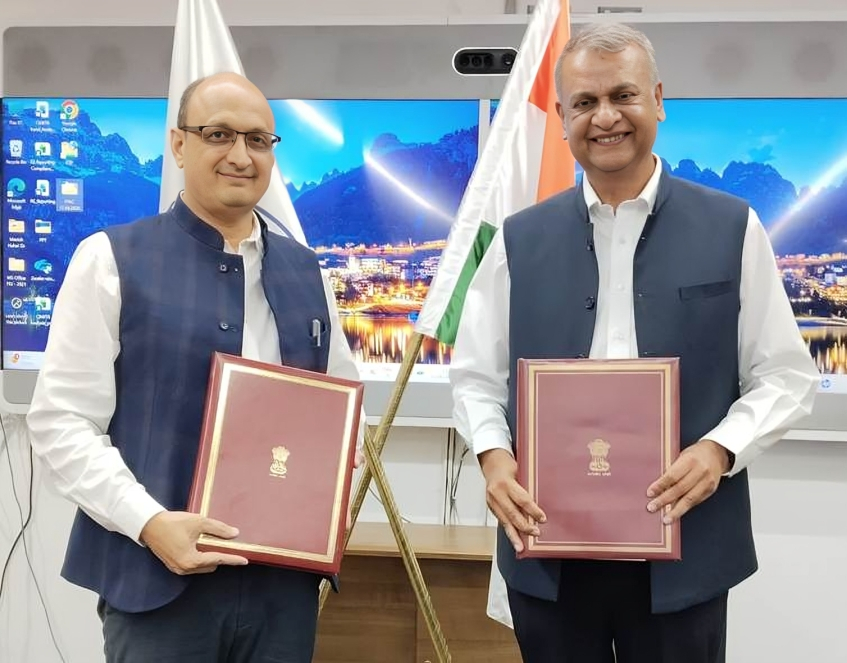
The MoU, signed by Shri Amit Mohan Govil, Director, FIU-IND, and Shri Sandip Pradhan, Whole Time Member, SEBI, aims to establish structured mechanisms for data exchange, joint risk assessment, and coordinated supervisory action. It also outlines processes for reporting under the Prevention of Money Laundering (PML) Rules and strengthens engagement with global financial intelligence networks through frameworks such as the Egmont Principles.
At one level, this is a regulatory alignment exercise. At another, it is a response to a more complex reality: financial crime is no longer confined within institutional or sectoral boundaries.
The Expanding Risk Landscape
Globally, the scale and sophistication of financial crime have expanded significantly. Estimates from international bodies such as the United Nations Office on Drugs and Crime suggest that money laundering accounts for between 2% and 5% of global GDP annually, translating into trillions of dollars moving through formal and informal channels.
In India, the rapid digitisation of financial services, growth in capital markets participation and expansion of fintech ecosystems have created new vectors of risk. The increasing use of layered transactions, cross-border flows, shell entities and digital assets has made detection more complex.
Regulators are now confronted with a fundamental challenge: risk is no longer linear. It is networked.
This is where institutional silos begin to weaken the effectiveness of oversight. Financial intelligence gathered by one agency may hold limited value unless it is contextualised with insights from another. The FIU-IND-SEBI MoU directly addresses this gap by enabling a more integrated approach to risk identification and response.
From Reporting to Intelligence Integration
Traditionally, anti-money laundering frameworks have relied heavily on compliance-driven reporting. Banks, intermediaries and market participants file suspicious transaction reports, which are then analysed by financial intelligence units.
However, the limitations of this model are increasingly evident. Reporting alone does not ensure detection, especially when financial crime strategies evolve faster than regulatory frameworks.
The MoU shifts the focus from isolated reporting to intelligence integration.
By enabling the sharing of relevant data across FIU-IND and SEBI databases, the framework enhances the ability to detect patterns that may otherwise remain fragmented. For example, unusual trading activity in capital markets, when combined with transaction-level intelligence from financial institutions, can provide a more comprehensive risk signal.
This convergence is particularly important in capital markets, where the speed and volume of transactions can obscure underlying intent.
Strengthening Supervisory Depth
Another critical dimension of the MoU is its emphasis on joint supervision and risk assessment. The agreement provides for the identification of money laundering and terror financing risks across financial sub-sectors, along with the development and dissemination of red-flag indicators.
This is a notable shift from reactive enforcement to proactive surveillance.
Equally important is the focus on capacity building. Outreach and training programmes for regulated entities are expected to strengthen AML/CFT capabilities at the operational level. In practice, this means that compliance is no longer a back-office function. It becomes a front-line defence mechanism.
Quarterly coordination meetings between the two agencies further institutionalise this approach, ensuring that intelligence flows are continuous rather than episodic.
Global Alignment and Cross-Border Relevance
Financial crime is inherently cross-border and domestic frameworks must align with global standards to remain effective. The MoU’s provision for information exchange through international networks such as the Egmont Group reinforces India’s integration into global financial intelligence systems.
This alignment is critical at a time when regulators worldwide are tightening scrutiny on beneficial ownership, cross-border flows and digital asset transactions.
For India, which is positioning itself as a major global financial and investment destination, the credibility of its AML framework has direct implications for investor confidence and systemic stability.
Why Such MoUs Matter Now
The importance of this MoU extends beyond administrative coordination. It reflects a broader shift in regulatory thinking.
First, it recognises that financial crime risk is systemic, not isolated.
Second, it acknowledges that data, when siloed, loses its intelligence value.
Third, it reinforces that compliance must evolve into risk intelligence.
In an environment where financial systems are increasingly interconnected, the ability to correlate signals across institutions, sectors and geographies becomes a decisive advantage.
From Compliance to Collaborative Resilience
The FIU-IND–SEBI collaboration underscores a larger transformation underway in India’s regulatory architecture. The focus is moving from rule-based compliance to intelligence-led supervision, from institutional independence to coordinated resilience.
For regulated entities, this shift carries clear implications. The expectation is no longer limited to meeting reporting obligations. It extends to building systems capable of detecting, interpreting, and responding to complex risk signals.
For policymakers, the challenge will be to sustain this collaborative momentum across other regulatory domains, including banking, insurance and fintech.
The FIU-IND–SEBI MoU is not merely an agreement between two institutions. It is an acknowledgment that the nature of financial crime has changed and so must the response.
In the emerging risk landscape, the effectiveness of regulation will depend less on the strength of individual frameworks and more on the quality of coordination between them.
As financial systems become more integrated, so too must the mechanisms designed to protect them.