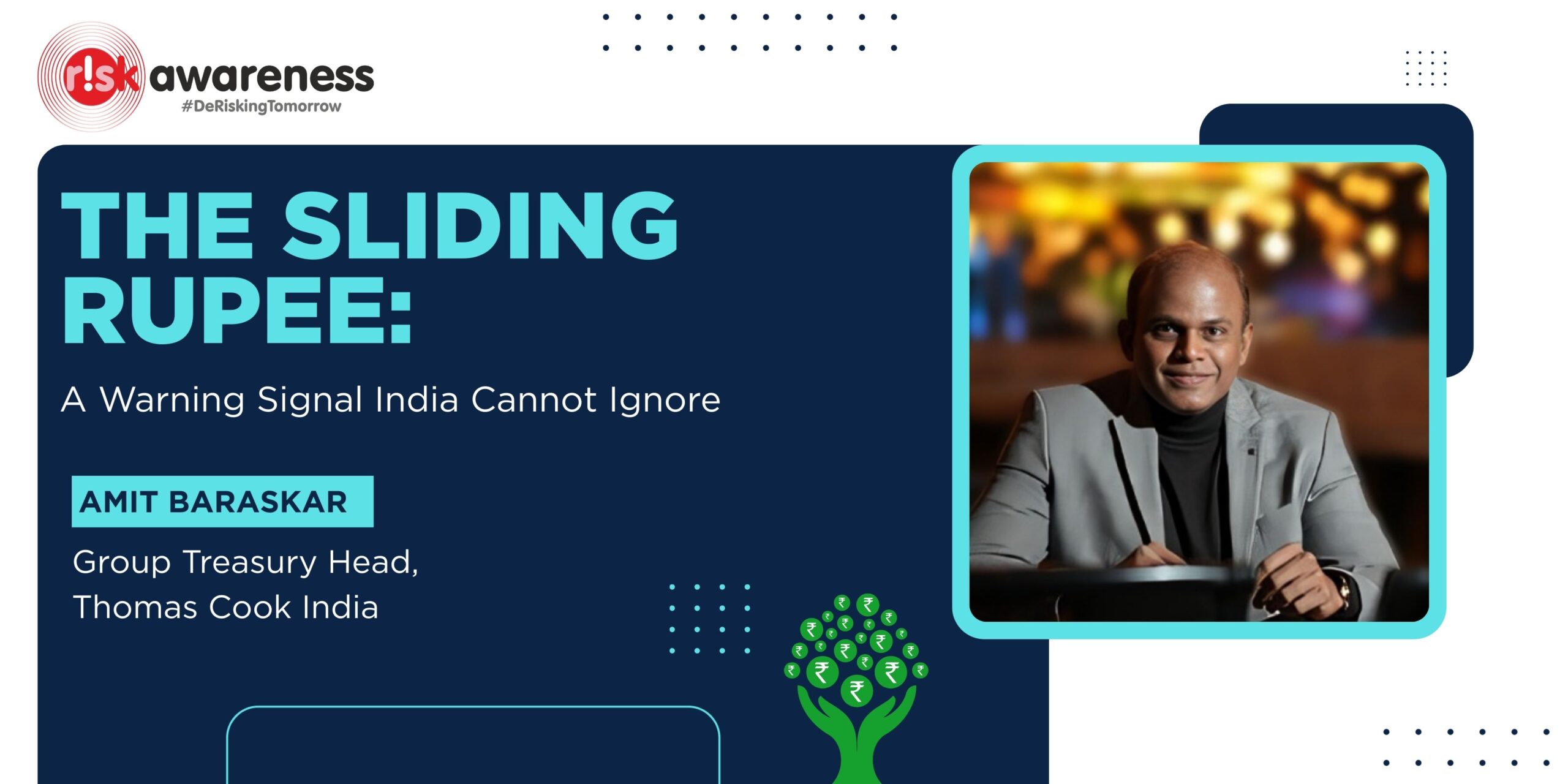





By Amit Baraskar
Group Treasury Head, Thomas Cook India
Periods of global stress have a way of resurrecting unresolved questions. Few have proved as persistent as the debate around the future of the US dollar. Each cycle of volatility renews speculation about whether the world’s dominant reserve currency is approaching a point of inflection. In 2025, that debate returned with greater urgency.
Trade disruptions, tariff uncertainty and policy unpredictability, many of them traceable to the aftershocks of the Trump-era tariff framework, sent fresh tremors through global markets. Beyond the immediate volatility, these developments exposed a deeper vulnerability: the extent to which the global financial system remains dependent on a single currency.
The year effectively became a live stress test. As supply chains recalibrated and capital flows responded sharply to political signals, governments and corporates were reminded that dollar concentration is not simply a macroeconomic curiosity. It is a systemic exposure embedded across trade, capital markets and balance sheets worldwide.
Yet the data remains unequivocal. The International Monetary Fund recognises eight major reserve currencies, but the distribution is heavily skewed. The US dollar continues to account for approximately 58–59 per cent of global reserves, followed by the euro at around 20 per cent, the Japanese yen at 6 per cent and the British pound at 5 per cent. The remaining share is dispersed across currencies that lack the scale, liquidity and institutional depth required to serve as credible global anchors.
This imbalance explains why de-dollarisation has remained more a strategic aspiration than a practical outcome. The events of 2025 were widely viewed as an acid test. If there was ever a moment for alternatives to assert themselves meaningfully, it was during a period of heightened geopolitical and trade uncertainty.
What emerged instead was fragmentation.
Europe has sought to elevate the euro’s role as a safe-haven currency, alongside traditional refuge currencies such as the Swiss franc and the yen. Economists have revisited the idea of a global ‘Bancor’, administered by a supranational authority. The IMF’s Special Drawing Rights framework, built on a basket of major currencies, continues to evolve. Parallel efforts, from BRICS-led currency discussions and the digital euro initiative, to bilateral trade settlement in local currencies, India’s UPI architecture and the increasing use of the digital yuan, signal intent.
Taken individually, these initiatives are meaningful. Taken together, they underscore the absence of a unified, scalable alternative capable of challenging the dollar’s central role.
From a treasury perspective, the conclusion is difficult to avoid. While the world is actively searching for diversification, current efforts remain siloed. None materially diminish the dollar’s structural advantages and that, in itself, represents a continuing risk for the global system.
The dollar’s dominance is sustained by more than policy preference. It rests on deep and liquid capital markets, institutional credibility, legal predictability and the capacity to provide liquidity in times of crisis. Paradoxically, moments of stress often reinforce these advantages, as global capital gravitates towards what is perceived as the least imperfect option.
For Indian corporates, this reality has practical consequences. Exchange-rate volatility, funding costs, imported inflation and balance-sheet sensitivity increasingly demand board-level attention. For treasury leaders, the debate has moved beyond ideological questions of de-dollarisation to the more pragmatic challenge of resilience.
The emerging playbook is therefore not USD versus alternatives, but USD plus preparedness, diversification where feasible, disciplined hedging and scenario planning grounded in the recognition that concentration risk persists.
The US dollar may not rule indefinitely. But for now, its position remains firmly entrenched. The more relevant question is not when the throne will be vacated, but whether global institutions and corporates are adequately prepared for the risks that accompany its continued dominance.
About The Author :
Amit Baraskar is a Chartered Accountant and Group Treasury Head at Thomas Cook India, overseeing global treasury and foreign exchange operations across 24 countries. An award-winning leader in risk and capital management, he is also a global treasury speaker and writer, and former Chairman and Co-Founder of the India Corporate Treasurers Association (ICT).
Disclaimer : Views expressed in the article are the personal opinions of the author.