





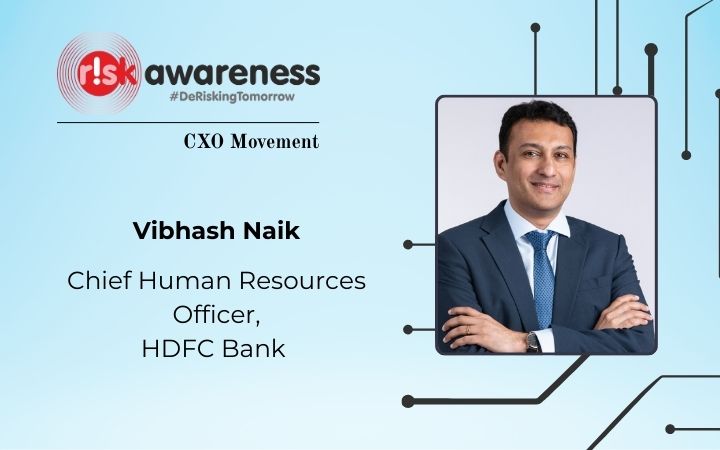
HDFC Bank has named Vibhash Naik as its new Chief Human Resources Officer, effective February 2, 2026, marking an important leadership transition at India’s largest private sector lender.
The appointment follows a structured and rigorous selection process led by Venator Search Partners, a retained executive search firm mandated to assess a carefully shortlisted pool of internal and external candidates. After an extensive evaluation, Naik was selected for the role, underscoring the bank’s emphasis on leadership maturity, execution capability and deep institutional alignment.
Naik brings over 25 years of cross-sector HR experience spanning talent management, organisation development, performance frameworks, HR technology and rewards. He rejoins the wider HDFC group after nearly 14 years at HDFC Life, where he last served as Chief Human Resources Officer. During his tenure, he played a pivotal role in building a technology-enabled people ecosystem supporting a workforce of close to 40,000 employees.
At HDFC Life, Naik was instrumental in strengthening employee experience, streamlining HR operations and nurturing a collaborative, performance-oriented culture. His familiarity with the HDFC ecosystem is expected to enable continuity and a smooth transition as he takes charge of the bank’s human capital agenda.
Earlier in his career, Naik held senior HR and specialist roles at organisations including Lehman Brothers, Religare Macquarie Wealth Management, Tata Interactive and Atos Origin. He holds a master’s degree in Labour Studies from the University of Mumbai and is widely regarded for combining strategic HR thinking with strong on-ground execution.
The appointment reflects HDFC Bank’s continued focus on leadership stability and people-led growth as it navigates the next phase of scale and transformation.
From a risk awareness perspective, leadership continuity in critical functions like HR reduces people, compliance and execution risks during large-scale organisational transitions. A seasoned insider with ecosystem familiarity strengthens cultural stability and mitigates talent and governance risks as the bank scales.