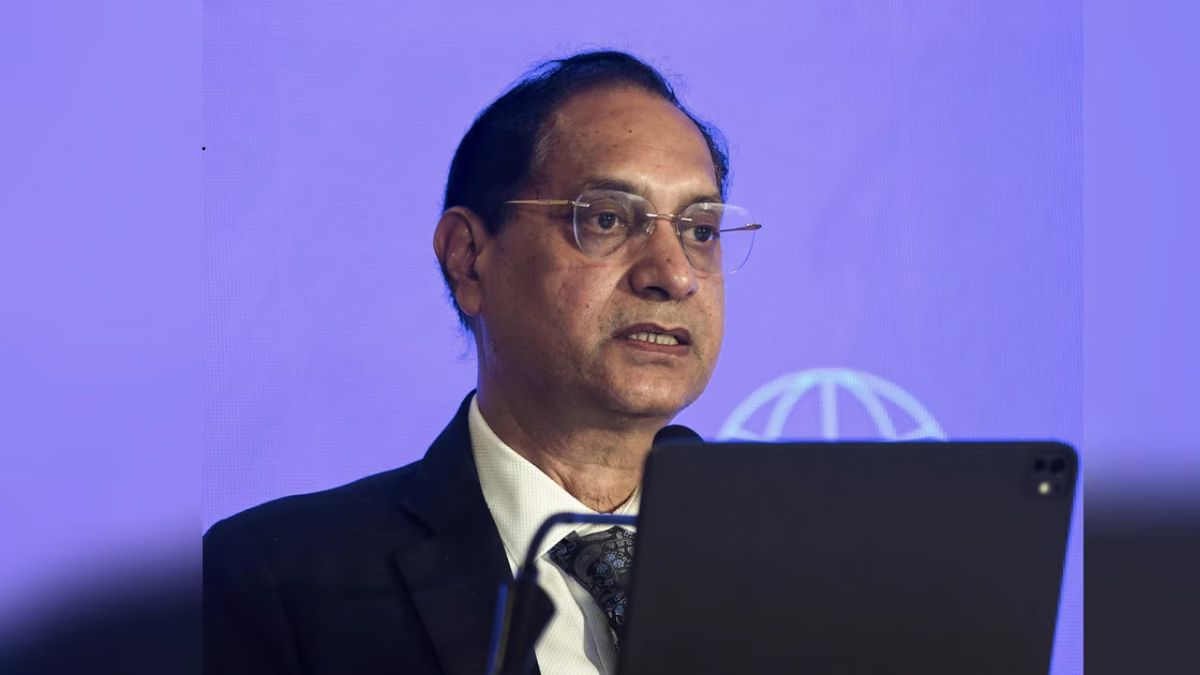






Artificial intelligence has moved from being a technology conversation to becoming a banking strategy conversation. But the Reserve Bank of India’s message to the industry is clear: the winners of the AI era will not necessarily be the banks that deploy the most AI, or deploy it the fastest. They will be the institutions that understand what they are deploying, govern its outcomes and preserve customer trust.
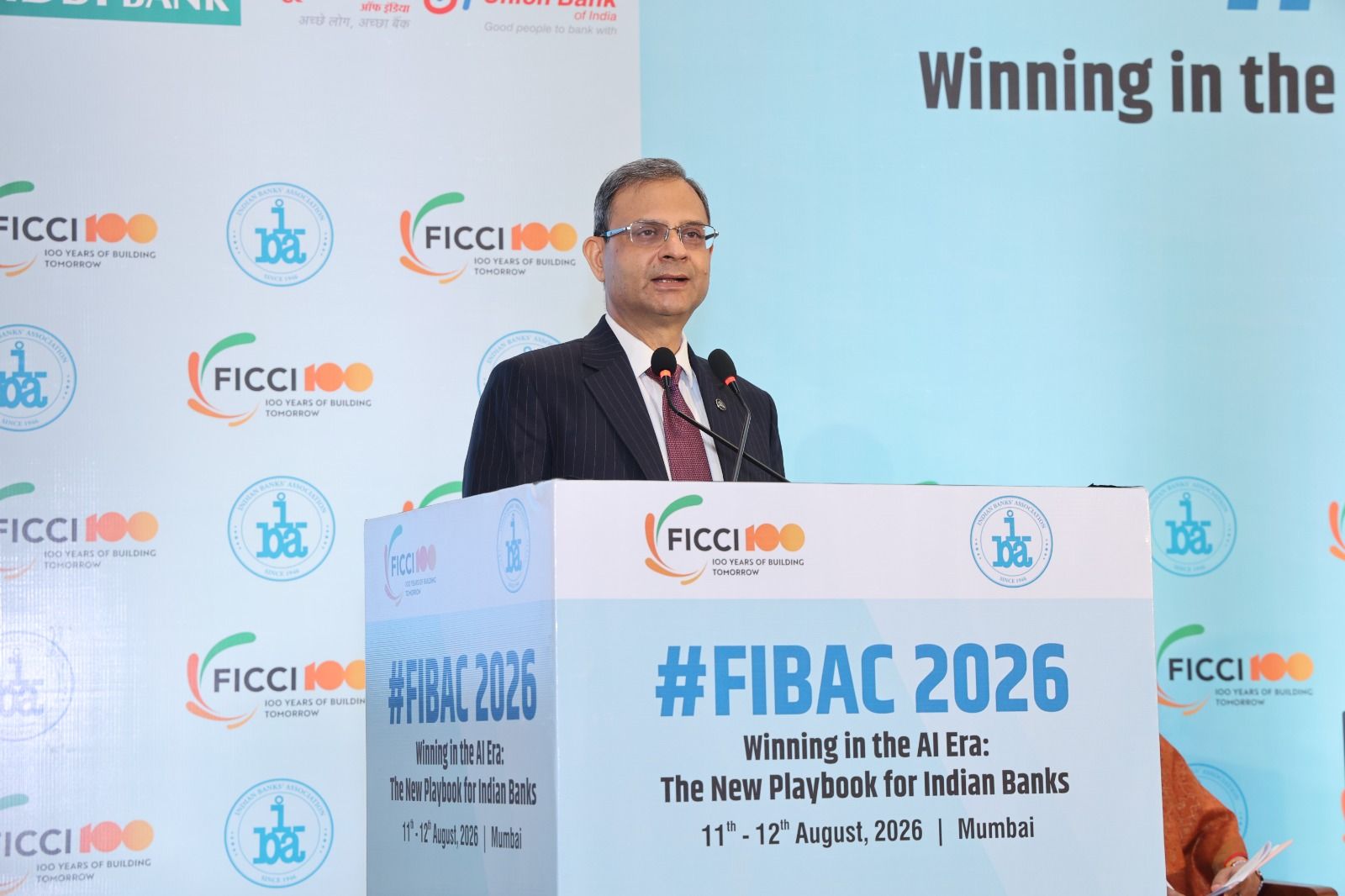
That was the central message from RBI Governor Sanjay Malhotra in his inaugural address at FIBAC 2026 in Mumbai on August 11, where he outlined what could become one of the clearest articulations yet of the central bank’s expectations from Indian banks entering the AI era.
Speaking on the theme “Winning in the AI Era: The New Playbook for Indian Banks,” Malhotra positioned AI not as another technology project but as a fundamental change in how banks operate, assess risk, serve customers, price capital and organise themselves. His framing is significant because it moves the conversation beyond AI adoption towards AI-enabled banking with accountability.
AI Is Not the Next Technology Project. It Is the Next Banking Model
Perhaps the strongest message from the Governor’s address was his rejection of the idea that AI can be treated as another technology procurement exercise.
His description of AI as “a new way of doing business” has important implications for bank leadership. The question is no longer whether a bank has launched a generative AI chatbot, automated document processing or introduced an AI-powered fraud engine. The more fundamental question is whether AI is being integrated into the institution’s decision-making architecture.
That includes credit underwriting, customer service, fraud detection, liquidity forecasting, compliance, operations, risk management and potentially capital allocation.
This is why the Governor’s use of the word “playbook” is particularly important. Every bank will have a different AI journey depending on its customer base, risk appetite, technology maturity and governance capabilities. The RBI does not appear to be advocating a one-size-fits-all model. Instead, it is asking banks to approach AI deliberately and strategically rather than allowing technology adoption to happen through disconnected experiments.
From Digital India to AI-Enabled Financial Intelligence
The Governor also placed India’s AI opportunity within the country’s existing digital public infrastructure.
Aadhaar, UPI, DigiLocker, ONDC, Account Aggregator and the Unified Lending Interface have created a digital foundation on which private-sector innovation can build. Governor’s observation that AI could potentially do for financial judgment what UPI did for financial transactions offers perhaps the most powerful way of understanding India’s opportunity.
UPI made payments faster, cheaper and more accessible. AI could potentially make financial decision-making more granular, predictive and accessible.
That has particular relevance for a country where large sections of borrowers, small businesses and new-to-credit customers may not possess the traditional financial histories that banks have historically relied upon.
The Governor specifically pointed to alternative data such as cash flows, GST filings, utility payments and digital footprints as potential inputs for AI-enabled underwriting. This could expand the definition of who is considered “bankable”, while simultaneously allowing banks to identify emerging credit stress earlier through enhanced risk models and scenario analysis.
For India’s MSME ecosystem, this could be particularly consequential. Businesses that have historically struggled to demonstrate conventional creditworthiness could potentially become more visible to formal lenders if their wider digital and cash-flow footprints can be assessed responsibly.
The Five Areas Where AI Could Reshape Banking
The Governor identified five broad areas where AI can fundamentally change Indian banking.
The first is credit delivery. AI can process larger and more diverse datasets than traditional underwriting models, potentially lowering the marginal cost of evaluating borrowers while extending credit to customers with limited formal financial histories.
The second is customer service. Rather than simply replacing human employees, AI can augment relationship managers by giving them better information, identifying risk signals and helping match customers with appropriate products. AI-assisted grievance redressal and personalised financial guidance could also improve customer experience.
The third is financial inclusion. This may ultimately be one of AI’s most important applications in India. Voice interfaces in Indian languages can reduce language barriers, while predictive systems could help identify borrowers showing early signs of financial stress and enable intervention before the situation deteriorates.
The fourth is operational productivity. Document processing, reconciliation, internal audit sampling, transaction reporting and regulatory returns are areas where AI-assisted automation could reduce manual workloads and operational errors.
The fifth is fraud prevention. This point is particularly relevant as digital transactions continue to expand. The Governor argued that fraud increasingly moves at the speed of an API call, making traditional rules-based systems vulnerable to adaptive fraud patterns. Machine-learning systems that continuously learn transaction behaviour can potentially identify anomalies in real time rather than after losses have occurred.
The broader message is that AI is simultaneously a growth technology, efficiency technology, inclusion technology and risk technology.
But the RBI Is Not Asking Banks to Move Fast at Any Cost
The most interesting part of the speech may actually have been the second half.
After making a strong case for AI adoption, the Governor devoted significant attention to the risks that could emerge if AI becomes deeply embedded in banking without adequate controls. The first is the black-box problem.
If an AI system rejects a small business for credit, both the customer and the regulator need to understand why. Explainability therefore becomes more than a technical concern. It becomes an issue of accountability.
The second is bias and exclusion. Historical lending data can contain historical biases. If those biases are absorbed into AI models, technology could reproduce or even amplify them at scale.
The third is concentration risk. If multiple banks depend on the same foundation models or technology vendors, a vulnerability in shared infrastructure could move from being an individual bank problem to becoming a systemic financial risk.
The fourth is third-party dependency. Smaller banks in particular are unlikely to build sophisticated foundation models internally. They will increasingly depend on technology providers. The Governor therefore made it clear that outsourcing technology does not outsource responsibility. Contracts must incorporate audit rights, explainability requirements and credible exit plans.
The fifth is data privacy and security, followed by cyber and adversarial risks such as data poisoning, model manipulation and attacks designed to deceive AI-powered fraud systems.
But perhaps the most important risk identified was the seventh: the erosion of human judgment and accountability.
“The model decided” cannot become an acceptable explanation for a banking decision.
That principle could become one of the defining lines of AI governance in financial services.
AI Governance Is Moving into the Boardroom
The Governor’s address makes one thing particularly clear: AI governance cannot remain confined to the technology department.
He called for board-approved AI governance policies, clear accountability for outcomes, comprehensive inventories of AI systems, explainability for material customer decisions, red-teaming and stress testing, and meaningful human oversight.
This effectively turns AI governance into an enterprise-wide responsibility.
For boards, the issue is no longer simply whether management has an AI strategy. It is whether the organisation understands where AI is being used, what data feeds those systems, who is accountable for their outputs, how models are tested and what happens when they fail.
For chief risk officers, this means AI risk will increasingly intersect with model risk, operational risk, cyber risk, third-party risk, conduct risk and potentially systemic risk.
For CISOs, AI creates a paradox: the technology can strengthen fraud detection and cyber defence while simultaneously creating new attack surfaces.
For business leaders, the challenge will be to capture productivity gains without weakening control environments.
The common thread is accountability.
The RBI’s Regulatory Philosophy Is Equally Significant
Another important takeaway is how the RBI intends to regulate AI.
Governor described the central bank’s approach as principles-based and proportionate, rather than rigid and prescriptive. The reasoning is straightforward: AI risks will look different for a large bank developing proprietary models and a smaller institution deploying a vendor-provided solution.
Yet the Governor also indicated that certain expectations will apply across institutions.
Banks should know what AI systems they have deployed, including AI embedded within vendor products. They should establish board-level governance, maintain the ability to explain material AI decisions, stress-test models and retain meaningful human oversight.
This suggests that the regulatory approach is attempting to balance innovation with resilience rather than choosing one at the expense of the other.
The Governor explicitly described innovation and safety as complementary requirements of a durable financial system.
That is an important signal to the industry. The RBI is not positioning itself as an obstacle to AI adoption. It is positioning itself as an enabler of responsible adoption.
From Regulation at a Distance to Regulation Alongside Innovation
The RBI’s willingness to engage with the industry as AI evolves is another noteworthy element of the speech.
The Governor said the central bank intends to learn alongside the industry rather than regulate from a distance, while continuing to provide proportional, consultative, evidence-based and agile regulation. The regulatory sandbox will also remain a space for testing innovative use cases.
This is important because AI is developing faster than traditional regulatory cycles.
A rigid framework designed around today’s technology could become obsolete quickly. A principles-based approach allows the regulator to establish expectations around accountability, safety, fairness and resilience while giving institutions room to innovate.
The RBI’s proposed common utilities, including MuleHunter and the proposed Digital Payments Intelligence Platform, also demonstrate how the regulator sees technology as part of the solution to emerging financial-system risks.
The Real AI Opportunity May Be India’s Unfinished Banking Agenda
The Governor’s concluding remarks bring the entire argument back to some of India’s most persistent financial-sector challenges.
India still has an underserved MSME credit market. Retail credit is evolving. Customer service has room for improvement. Intermediation costs can be reduced. Digital fraud needs to be contained. AI therefore has a distinctly Indian banking opportunity.
The objective is not simply to make banks more technologically sophisticated. It is to use AI to solve problems that have remained structurally difficult at scale.
That could mean better credit access for MSMEs, earlier identification of stressed borrowers, lower operating costs, more effective fraud prevention and more personalised customer engagement.
In that sense, the AI opportunity for Indian banking is not about replacing the existing banking model with machines. It is about making the existing financial system more intelligent, inclusive and resilient.
The New Competitive Advantage Will Be Trust
The strongest takeaway from the Governor’s speech is perhaps also the simplest.
AI capability by itself will not determine which banks win.
Banks will differentiate themselves by how effectively they combine technology, data, talent, governance and trust.
An institution that deploys AI quickly but cannot explain its decisions, protect customer data, manage vendor dependencies or intervene when models fail may create more risk than value.
Conversely, a bank that builds strong governance around AI can potentially use the technology to expand credit, improve productivity, strengthen fraud detection and deepen financial inclusion while maintaining customer confidence.
That is why the Governor’s closing message deserves particular attention: the banks that win in the AI era will not necessarily be those that adopt AI the most or the fastest, but those that understand what they deploy, maintain clear accountability and protect customer trust.
The Bigger Message for Indian Banking
The FIBAC 2026 address marks an important shift in the way AI is being discussed within India’s financial system.
The conversation is moving beyond “Should banks adopt AI?” That question is effectively settled.
The new questions are far more consequential:
Where should AI be deployed? How should it be governed? Who remains accountable? How can its benefits reach underserved customers without creating new forms of exclusion? And how can banks ensure that technology designed to reduce risk does not itself become a source of systemic risk?
The RBI’s message is not anti-AI, nor is it blindly enthusiastic about AI. It is more nuanced: embrace the technology, but build the controls alongside it.
For Indian banks, that may indeed be the new playbook. The competitive race has begun. But in banking, winning the AI era will ultimately depend not only on intelligence in the machine, but on judgment, accountability and trust around it.