






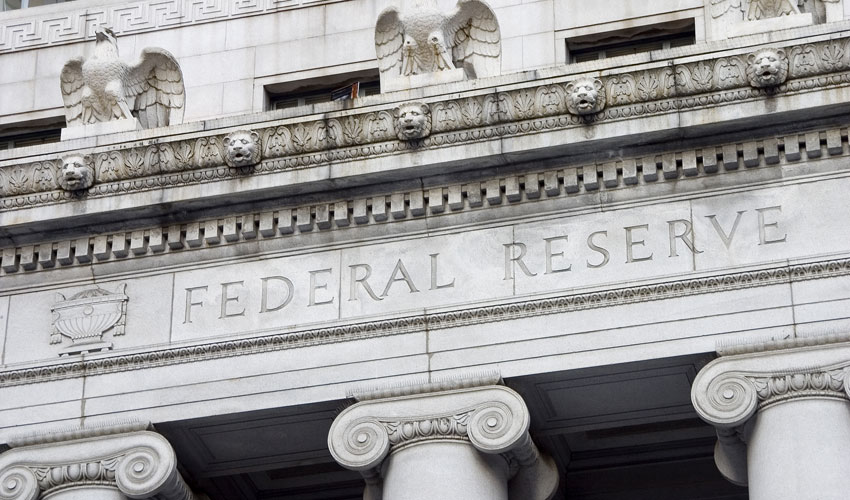
The Federal Reserve lowered its policy rate by another 25 basis points on 29 October 2025 the second reduction inside two months taking the federal-funds target to 3.75%-4.00%. What might once have been a routine shift in monetary posture is now a more complicated signal: the world’s largest economy is moving from aggressive inflation control to pre-emptive easing amid an uncertain data backdrop, partly caused by the recent U.S. government shutdown that obscured timely policy inputs.
For Indian business leaders from corporate treasuries to small exporters the question is not only that rates fell but why they fell, and how the new dynamics interact with India’s improving macro indicators: consumer inflation at 1.54% (Sept 2025) and foreign exchange reserves north of USD 702 billion (as of 17 Oct 2025). These facts change the playbook.
Why this cut matters differently
The Fed’s October cut follows a September move and arrived in an environment where traditional policy signals were blurred by missing or delayed U.S. data. In plain terms: the Fed cut not because inflation is settled, but because the information set on growth and jobs was incomplete and risk to demand had risen. Central banks always prefer to act on evidence; when evidence is patchy, policy choices embed precaution as much as prediction. That nuance matters because markets interpret cuts in more than one way as stimulus, as insurance or as a sign of downside risk and each interpretation has different spillovers for emerging markets.
Capital flows and the rupee: a new calibration
Lower U.S. rates generally weaken the dollar and increase global liquidity, often improving capital access for emerging markets. With the Fed now at 3.75%-4.00%, yield differentials shift in favour of higher-growth markets like India. That can translate into portfolio inflows and a softer cost of dollar funding for firms with external borrowings.
But there’s a caveat. The cut’s motivation incomplete data and demand concerns suggests elevated macro uncertainty in the short term. That uncertainty can temper real economic demand in the U.S., which matters for Indian exporters. In other words, easier global money and weaker external demand can coexist. The net effect on the rupee and on capital flows will therefore be determined more by confidence metrics and forward guidance than by the headline cut alone.
Implications for corporates and MSMEs
Borrowing and funding: Indian firms with external commercial borrowings may see some relief in dollar funding costs, but onshore credit conditions will depend on RBI’s reading of domestic inflation and growth. Given India’s low CPI (1.54% in September), RBI has room to consider easier policy, but it will move cautiously to avoid reigniting inflation. For MSMEs, the structural problem remains access to credit; marginally lower global rates help, but they don’t automatically open bank credit lines to smaller firms.
Currency and hedging: A softer dollar can firm the rupee briefly, reducing input costs for importers. At the same time, exporters face the risk of muted external demand. CFOs and treasurers should therefore revisit hedging strategies shifting from short-term tactical hedges to a more strategic mix aligned with scenario planning that includes weaker U.S. demand.
Trade and demand: If the Fed’s easing reflects lower future U.S. consumption, Indian exporters that serve U.S. markets particularly tech, retail and components must recalibrate forecasts for 2026. The prudent route is diversification: accelerate market development under existing FTAs (UAE, Australia, EU) and deepen ties in neighbourhood markets to offset potential U.S. softness.
The danger of mistaking liquidity for growth
The classic policy trap remains relevant. Lower rates can inflate asset prices even when underlying economic activity is tepid. Equity rallies and compressed credit spreads may give the illusion of recovery while real demand lags. Risk officers should therefore separate monetary stimulus from structural performance: stress-test balance sheets for revenue shocks, not just interest-rate sensitivity.
India’s relative strengths: stability and policy space
Two home truths make India better positioned than in many past cycles. First, inflation has dropped to unusually low levels for the country, 1.54% gives the RBI policy manoeuvre room. Second, reserves exceeding USD 702 billion provide a buffer against abrupt capital-flow reversals. These metrics afford India the option to manage an external easing cycle thoughtfully: to welcome stable inflows while resisting volatile, yield-chasing flows.
Policy makers should use this window to deepen domestic market infrastructure extend long-tenor finance for MSMEs, expand credit-guarantee schemes and strengthen local bond markets so that firms can access patient capital rather than rely on hot money.
Strategic takeaway
The Fed’s October cut is not a simple tailwind. It is a signal that policymakers are buying insurance against downside risks in an environment where data is incomplete and demand patterns are shifting. For India, the prudent posture is to view this period as one for building resilience: locking in sensible hedges, strengthening cash-flow management and converting global liquidity into durable investment rather than speculative exposure.
In short: this is a yellow light. Use it to prepare, not to accelerate without guardrails. The organisations that translate this moment into durable advantage will be those that treat risk as a strategic variable not a temporary fix.