





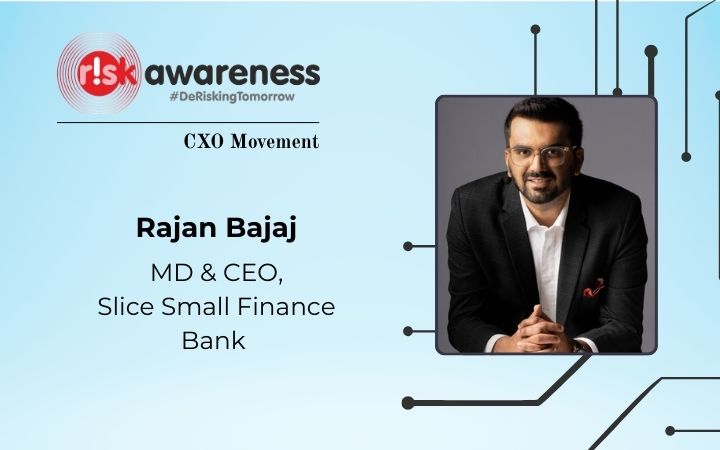
Guwahati-headquartered Slice Small Finance Bank has appointed its founder Rajan Bajaj as Managing Director and Chief Executive Officer, following approvals from shareholders and the Reserve Bank of India. The appointment formalises a leadership shift at the lender formed in 2024 through the merger of Bengaluru-based fintech Slice and Northeast Small Finance Bank. Prior to the merger, the RBI had approved former Andhra Bank executive Satish Kumar Kalra as CEO in 2023, while Bajaj later served as Executive Director of the combined institution.
Founded in 2016 by Bajaj, an IIT Kharagpur alumnus, Slice began as a Gen-Z focused credit startup before expanding into lending distribution and payments through GIPL. In 2018, Bajaj established Quadrillion Finance Private Limited, a wholly owned NBFC that deployed technology-led underwriting and data-driven risk processes to serve retail customers and small businesses. Quadrillion Finance and GIPL were profitable prior to their integration into the banking entity, underscoring the group’s transition from fintech platform to regulated lender.
Backed by more than $250 million in capital from investors such as Tiger Global Management, Insight Partners and Advent International, the institution now reports a user base exceeding 20 million, a workforce of over 3,000 employees, and more than 4 million savings accounts opened within a year. For FY26, the bank posted a profit after tax of ₹27.97 crore, reflecting its transition toward sustainable operating performance.
Slice Small Finance Bank currently offers savings accounts, fixed deposits, UPI services, credit products including a UPI-linked credit card, and what it describes as India’s first UPI-led bank branch model. With regulatory clearance now in place, Bajaj is expected to steer the lender through its next phase as a digital-first small finance bank operating within prudential banking norms.
In his remarks, Bajaj highlighted the expanding need for inclusive banking in India and pointed to digital infrastructure and artificial intelligence as catalysts for delivering personalised financial services at scale, while lowering structural costs and broadening access.
From RiskAwareness perspective the evolution from fintech disruptor to regulated small finance bank significantly elevates expectations around governance, asset quality and capital discipline. The durability of this model will hinge not only on digital reach, but on underwriting rigor, treasury controls and sustained regulatory compliance in a tightening supervisory environment.