



In boardrooms, control rooms and compliance cells across India’s banking and financial sector, “vigilance” has long been synonymous with oversight- audits, checks, and disciplinary frameworks. Yet, as institutions grapple with rising fraud sophistication, cyber manipulation and decision bias under pressure, a quiet realization is emerging: the future of vigilance lies as much in mindfulness as in monitoring.
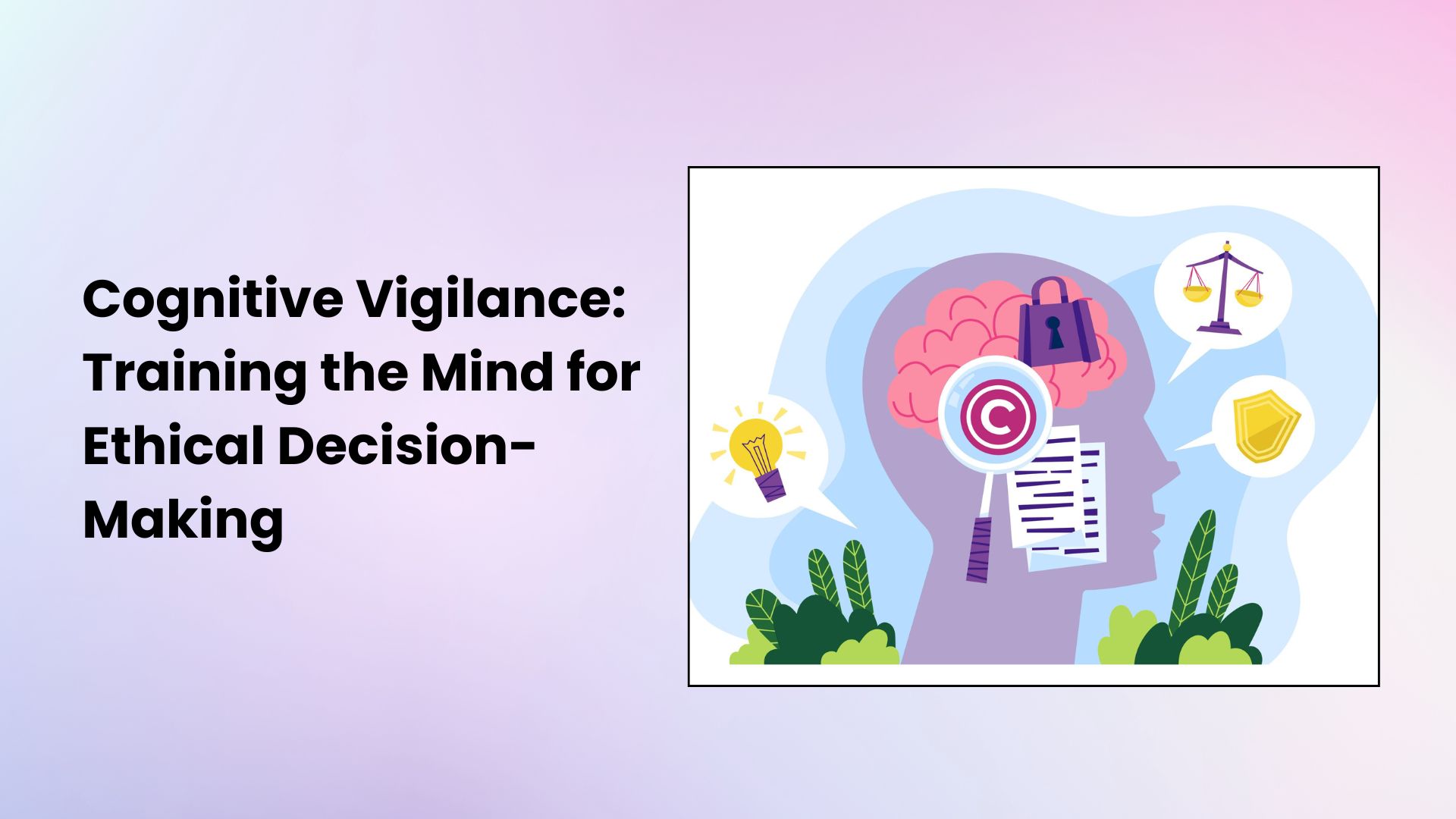
As India marks Vigilance Awareness Week 2025, the theme of integrity finds new resonance in the concept of ‘Cognitive Vigilance’- the mental discipline to stay ethically alert, self-aware and emotionally balanced amid complex choices. In a risk-driven economy, the next frontier of corporate governance is not stronger surveillance, but sharper consciousness.
The Psychology of Integrity in Financial Decisions
Every ethical breach in banking or corporate finance from unauthorized lending to insider trading or data manipulation begins not in systems, but in cognition. It starts with how decisions are justified.
Researchers describe this as the Bias-Pressure-Rationalization Triangle, the behavioural root of misconduct:
- Bias distorts perception. Credit officers may overrate client reliability based on familiarity; auditors may unconsciously downplay red flags in high-performing divisions.
- Pressure accelerates compromise. Targets, promotions or investor expectations can create moral shortcuts.
- Rationalization provides the excuse: “It’s just a temporary adjustment,” “Everyone in the market does it,” “It won’t impact the books.”
The interplay of these forces transforms ethical decisions into transactional ones. Cognitive vigilance, therefore, means recognizing these distortions in real time, before they harden into misconduct. It’s not only about what professionals do, but how they think while deciding to do it.
The Missing Layer in Risk Governance
Most vigilance systems emphasize detection and deterrence, the post-factum response. But emotional intelligence (EI) introduces a preventive layer to risk governance.
Within banks, insurance firms and corporates, EI-driven vigilance programs can help employees:
- Recognize ethical red zones before escalation.
- Respond to pressure with emotional regulation rather than reactive compliance.
- Empathize with the institutional impact of their actions from customer trust to market stability.
Institutions like the Reserve Bank of India, IRDAI and CVC have consistently emphasized integrity and accountability frameworks, but the true test is in internalizing these principles. EI-based training, using behavioural simulations, scenario-driven dilemmas and reflection exercises can reshape vigilance from rule-following to value-understanding.
From Awareness Week to Behavioural Transformation
Vigilance Awareness Week often begins with slogans and ends with ceremonies. But for India’s BFSI ecosystem, the challenge is continuity making vigilance a daily reflex.
Banks that embed ethics into their core operational risk models see measurable gains in employee engagement, customer trust, and regulatory perception. For instance:
- Ethics-based KRI (Key Risk Indicator) mapping helps identify where operational shortcuts most likely occur, such as branch-level reconciliations or digital onboarding.
- Behavioural audits, complementing financial audits, can reveal cultural vulnerabilities patterns of silence, normalization of deviance or poor escalation habits.
- Whistleblower analytics can shift from complaint logging to sentiment analysis, identifying cultural fault lines before they turn into governance failures.
Transforming vigilance into a behavioural movement requires leadership visibility, cross-functional collaboration and constant storytelling of integrity wins, not just failures.
Cognitive Vigilance in the Age of AI and Automation
As AI, machine learning and automation become integral to BFSI operations from loan approvals to fraud detection vigilance must evolve from human oversight to human-in-command.
Ethical lapses in algorithmic decision-making can occur even without intent when data is biased or accountability is diffused. Thus, the next generation of vigilance frameworks must include AI ethics, model interpretability and human oversight protocols.
Cognitive vigilance here means understanding where human judgment must intervene especially in risk scoring, underwriting or compliance automation. Machines may calculate probability, but only humans can interpret principle.
Leadership and Institutional Trust
In governance, vigilance is leadership by example. When CXOs, risk heads and compliance officers exhibit transparency in their decisions such as disclosing conflict-of-interest scenarios or escalating ethical concerns they normalize accountability.
Boards and audit committees must view vigilance not as an operational function, but as a strategic trust lever. Embedding ethical KPIs into performance evaluations, promoting integrity-based leadership pipelines and fostering psychological safety for dissent can shift the cultural equilibrium from “reporting misconduct” to “preventing misconduct.”
From Oversight to Insight
The Vigilance Awareness Week 2025 presents a timely opportunity to expand the meaning of vigilance from oversight to insight.
Cognitive vigilance does not replace traditional vigilance; it strengthens it. It trains individuals to question biases, manage ethical fatigue and align compliance with conscience.
In India’s BFSI sector where every transaction is a test of trust vigilance must now evolve into thought leadership. Because risk doesn’t just originate in systems; it originates in silence, in rationalization and in unexamined thought.
Editorial Note
At RiskAwareness.in, we believe that ethical risk management begins with awareness not only of processes but of people. As the financial system grows more digital and decentralized, the next decade will demand a new kind of vigilance one powered by self-reflection, ethical reasoning and emotional intelligence.Vigilance Awareness Week should remind us that systems can monitor transactions, but only humans can monitor intent. And in that difference lies the future of institutional integrity.