



AI’s Power Problem: The Emerging Risk Boards Cannot Ignore

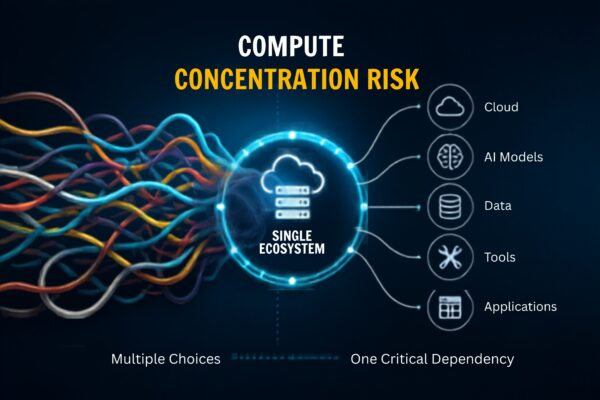
Artificial intelligence has rapidly moved from innovation labs into the core of corporate strategy. Boards are approving AI investments to improve productivity, accelerate decision-making and create new business models. Yet beneath the excitement lies a less discussed challenge that is increasingly attracting the attention of policymakers, energy regulators and risk professionals worldwide: AI’s growing appetite…

Read More

The Future of Resilience Engineering: Why Recovery Matters More Than Prevention

For more than three decades, cybersecurity strategies have been built around a simple ambition: keep adversaries out. Organisations invested billions of dollars in firewalls, endpoint security, identity management, threat intelligence and increasingly sophisticated detection tools to build stronger digital fortresses. Yet the reality of the modern threat landscape has exposed an uncomfortable truth: prevention alone…

Read More

Beyond Crisis Management: Why Scenario Planning Must Become a Regular Operating Discipline

The End of Predictability For decades, many companies treated uncertainty as an occasional disruption rather than a permanent business condition. Scenario planning therefore became an annual offsite exercise, a workshop dominated by PowerPoint presentations, hypothetical discussions and broad macroeconomic assumptions that rarely influenced day-to-day execution. In stable economic cycles, that approach appeared sufficient. In today’s…

Read More

When Risk Stops Being a Technical Brief and Becomes a Leadership Conversation

The most consequential risk failures rarely stem from ignorance. They arise when leaders believe they are aligned, until a crisis exposes that they were never speaking the same language to begin with. In modern enterprises, risk no longer sits neatly within compliance manuals or technology roadmaps. It lives at the intersection of strategy, reputation, resilience…

Read More

Why Banking Risk Demands a 360° Lens, From Credit to Cyber, Climate and Geopolitics

For decades, risk management in banking focused narrowly on measurable exposures credit defaults, liquidity buffers and capital adequacy. This traditional framework worked in an era when risks evolved slowly and were largely internal. But the new financial reality is non-linear. Today, a cyberattack on a fintech partner can cripple payment systems across states; a sanction…

Read More
Top