





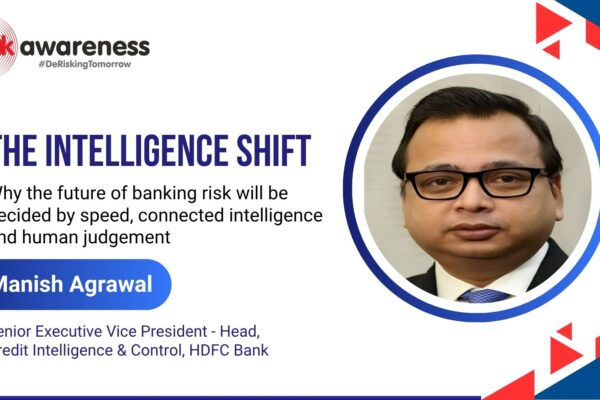
THE INTELLIGENCE SHIFT

Manish Agrawal on why the future of banking risk will be decided by speed, connected intelligence and human judgement As banking becomes faster, more digital and increasingly invisible to the customer, the nature of risk is changing with it. The traditional architecture of control designed to detect an anomaly, investigate it and contain the damage…


Read More

The Speed of Money: What the Global Banking Stress Cycle Revealed About Modern Liquidity Risk

For years after the global financial crisis, liquidity regulation became one of the defining pillars of banking resilience. Regulatory reforms strengthened capital buffers, introduced liquidity coverage ratios and pushed banks globally towards more conservative funding structures. Many institutions entered the post-pandemic period believing that liquidity frameworks were materially stronger than they had been a decade…

Read More

Why Banking Risk Demands a 360° Lens, From Credit to Cyber, Climate and Geopolitics

For decades, risk management in banking focused narrowly on measurable exposures credit defaults, liquidity buffers and capital adequacy. This traditional framework worked in an era when risks evolved slowly and were largely internal. But the new financial reality is non-linear. Today, a cyberattack on a fintech partner can cripple payment systems across states; a sanction…

Read More
Top