





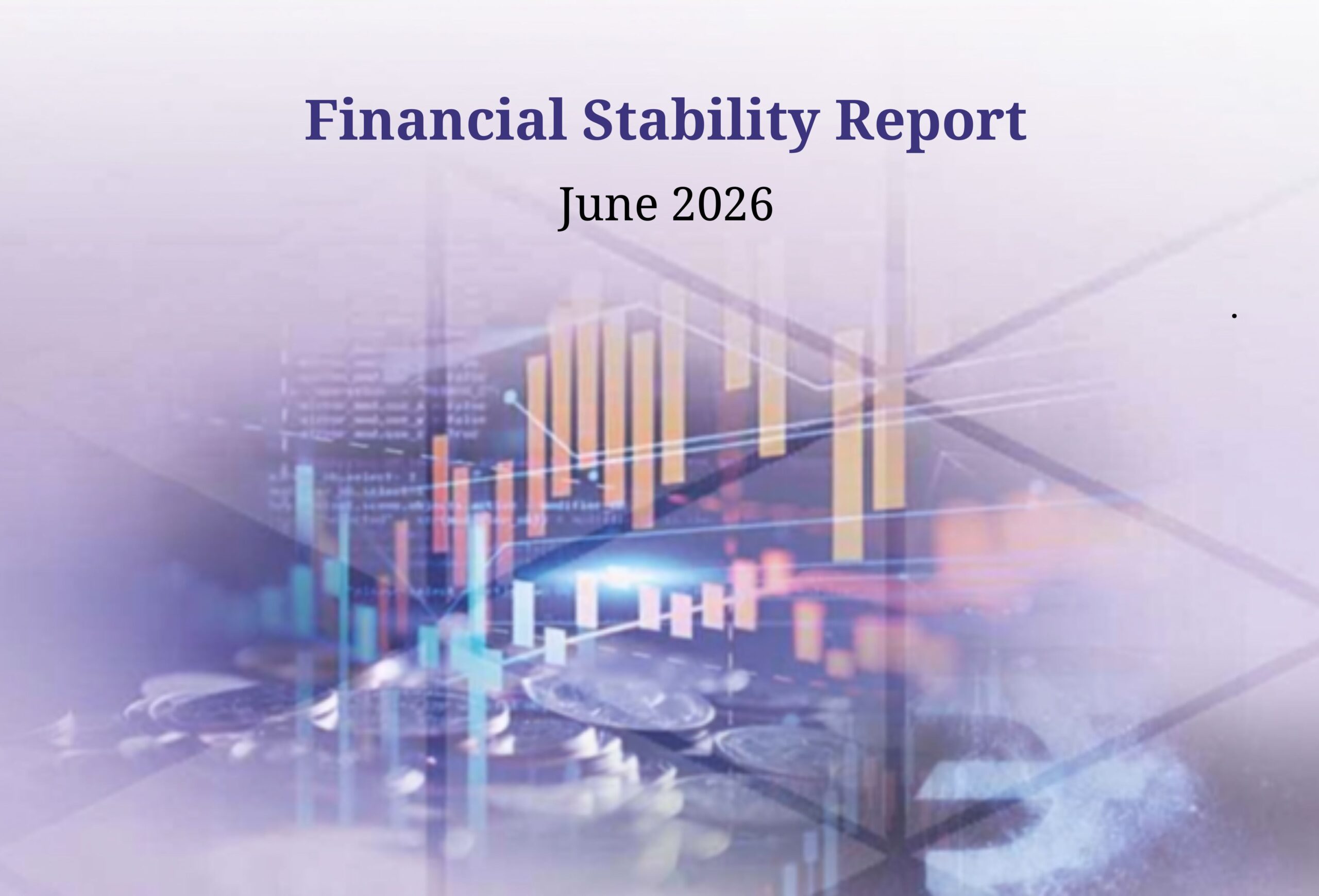
India’s financial system enters the second half of 2026 from a position of considerable strength.
The latest Financial Stability Report (FSR) released by the Reserve Bank of India presents a reassuring picture of a banking sector that is well-capitalised, profitable and resilient, supported by healthy corporate balance sheets, improving asset quality, and robust financial buffers. At the same time, the report cautions that the nature of financial risk is changing rapidly as global markets contend with geopolitical fragmentation, elevated asset valuations, artificial intelligence-led investment concentration, climate-related vulnerabilities and growing interconnectedness across financial institutions.
For bankers, risk professionals, NBFCs, investors, corporates and policymakers, the June 2026 Financial Stability Report offers a comprehensive assessment of where systemic vulnerabilities are accumulating and how India’s financial system is positioned to absorb future shocks.
Global Financial Stability Faces New Sources of Stress
The RBI notes that the global financial environment remains vulnerable despite easing inflationary pressures in several advanced economies.
Unlike previous cycles dominated by banking crises or sovereign debt concerns, current risks are increasingly emanating from geopolitical tensions, trade fragmentation, elevated public debt, volatile capital flows and concentrated investments in emerging technologies such as artificial intelligence.
The report specifically highlights concerns surrounding the rapid growth of AI-linked investments and rising leverage within technology ecosystems. A sharp correction in highly valued technology sectors could transmit stress through credit markets, private financing channels, investment funds, and financial intermediaries globally.
For emerging economies such as India, these developments reinforce the importance of maintaining strong domestic financial buffers and resilient institutions.
India’s Macro-Financial Fundamentals Remain Robust
Against a challenging global backdrop, India’s macro-financial environment continues to demonstrate resilience.
The RBI attributes this stability to sustained economic growth, moderating inflation, healthy corporate balance sheets, strong banking sector fundamentals and prudent macroeconomic management.
One of the most important pillars supporting this stability remains India’s external position. Foreign exchange reserves remain close to US$700 billion, providing substantial protection against external shocks, commodity price volatility, capital flow reversals and geopolitical disruptions.
The report’s overall assessment is clear: India’s financial system currently acts as a stabilising force for the broader economy rather than a source of systemic risk.
Banking Sector Continues to Strengthen
Perhaps the most significant takeaway from the report is the continued improvement in banking sector health.
Scheduled Commercial Banks (SCBs) recorded a Gross Non-Performing Asset (GNPA) ratio of 2.3 percent in March 2026, the lowest level seen in nearly two decades. Net NPAs declined further to just 0.5 percent, reflecting stronger recoveries, improved underwriting standards and better credit discipline across the system.
Capitalisation levels also remain comfortable. Banks reported a Capital to Risk-Weighted Assets Ratio (CRAR) of 17.3 percent, significantly above minimum regulatory requirements.
The combination of lower bad loans, stronger profitability and robust capital buffers reflects the extensive balance-sheet repair undertaken by India’s banking sector since the asset quality challenges of the previous decade.
For financial stability, this represents one of the strongest positions Indian banks have occupied in recent years.
RBI Stress Tests Validate Banking System Resilience
The Financial Stability Report’s stress-testing exercises provide further evidence of the sector’s strength.
Under severe macroeconomic stress scenarios involving economic slowdown, higher credit losses, and financial market disruptions, the aggregate banking system’s CRAR is projected to decline from 17.3 percent to 14.2 percent.
While capital buffers would naturally reduce under stress, the projected level remains comfortably above regulatory thresholds, indicating that the banking system possesses substantial shock-absorption capacity.
Importantly, most banks are expected to remain compliant with minimum capital requirements even under adverse scenarios.
This finding reinforces confidence that the banking sector is significantly better prepared for future disruptions than during previous economic cycles.
MSME Credit Remains a Bright Spot
The report contains encouraging signals for India’s SME ecosystem.
Credit flows to MSMEs continue to expand, reflecting both lender confidence and growing formalisation within the sector.
NBFC lending to MSME services recorded growth of 32.5 percent year-on-year, while lending to MSME industries increased by 26.2 percent.
Equally important, asset quality indicators within MSME portfolios have shown improvement, suggesting that credit growth has not come at the expense of underwriting discipline.
For small businesses, these trends indicate that formal credit channels remain supportive despite a more uncertain global environment.
The findings are particularly relevant as policymakers continue to prioritise SME financing as a key driver of employment generation, manufacturing growth, and economic development.
NBFC Sector Remains Well Capitalised
The non-banking financial sector continues to demonstrate resilience.
According to the report, NBFCs maintain aggregate capital adequacy levels above 26 percent, significantly exceeding regulatory requirements.
Stress-testing exercises indicate that even under severe asset quality deterioration scenarios, the sector as a whole would remain adequately capitalised, although a small number of institutions could experience stress.
The RBI nevertheless notes a moderate increase in sectoral risk due to some weakening in profitability and liquidity indicators.
While these developments do not currently pose systemic concerns, they highlight the importance of maintaining prudent risk management practices as credit growth accelerates.
The report also identifies concentration risk and large borrower exposures as areas requiring continued supervisory attention.
Fintech Lending Emerges as a Key Watchpoint
One of the more notable observations within the report relates to fintech-originated lending.
Fintech platforms continue to expand aggressively within the small-ticket personal loan segment, recording credit growth of 41.6 percent, compared with overall segment growth of 20.1 percent.
However, rapid growth has been accompanied by rising delinquencies.
The delinquency rate within fintech-originated small-ticket personal loans increased to 6.4 percent, raising concerns regarding borrower quality and underwriting practices.
The report further notes that approximately 70.5 percent of fintech lending remains unsecured, while nearly half of borrowers fall below the age of 35.
While fintech remains an important driver of financial inclusion and credit access, the findings suggest that regulators and lenders will continue monitoring this segment closely for emerging risks.
Contagion Risks Appear Contained
A key objective of the Financial Stability Report is assessing whether stress within one part of the financial system could trigger wider instability.
The RBI’s contagion analysis offers reassuring results.
The hypothetical failure of the largest contagion-causing NBFC would reduce the banking system’s Tier-I capital by approximately 3.1 percent, while a similar failure involving a housing finance company would result in a 3.6 percent impact.
Importantly, neither scenario would cause banks to breach regulatory capital requirements or trigger broader systemic contagion.
These findings indicate that interconnectedness within the financial system remains manageable despite increasing linkages between banks, NBFCs, housing finance companies and capital markets.
Liquidity Risks Remain Under Watch
While the mutual fund industry remains stable overall, the report identifies liquidity management as an area warranting attention.
Stress tests conducted on open-ended debt mutual funds found that 44 schemes with assets under management of approximately ₹3.18 lakh crore breached prescribed liquidity thresholds under stressed redemption scenarios.
Although this does not indicate immediate systemic vulnerability, it highlights the importance of liquidity preparedness during periods of market volatility.
As household participation in capital markets continues to grow, liquidity risk management will become increasingly important for preserving market confidence.
AI, Climate Risk and Operational Resilience Enter the Stability Agenda
Another notable feature of the report is the growing emphasis on emerging risks.
Artificial intelligence, digital finance, climate-related financial exposures, cyber resilience and operational continuity are increasingly becoming integral components of financial stability assessments worldwide.
The RBI notes that global regulators are actively developing governance frameworks around AI deployment, model risk management, digital operational resilience and third-party technology dependencies.
Similarly, climate-related financial risks are becoming an increasingly important consideration for banks, insurers, investors and regulators as transition and physical risks begin influencing asset valuations and lending decisions.
These developments suggest that future financial stability discussions will extend well beyond traditional credit and market risks.
The Broader Picture
The June 2026 Financial Stability Report delivers a broadly positive assessment of India’s financial system.
Banks are well-capitalised, asset quality has improved significantly, corporate balance sheets remain healthy and stress tests confirm substantial resilience across major segments of the financial sector.
At the same time, the report makes it clear that the next generation of financial risks will look very different from those of the past.
Artificial intelligence-driven market concentration, fintech credit quality, non-bank financial intermediation, liquidity management, cyber resilience, climate-related risks and growing global interconnectedness are emerging as the new frontiers of financial stability oversight.
For risk professionals, the report serves as both a reassurance and a roadmap.
The reassuring message is that India’s financial system enters this period of uncertainty from a position of strength.
The roadmap is that maintaining that strength will increasingly depend on identifying and managing risks that originate beyond traditional banking channels and across a rapidly evolving financial ecosystem.
Source: Reserve Bank of India, Financial Stability Report (June 2026).