




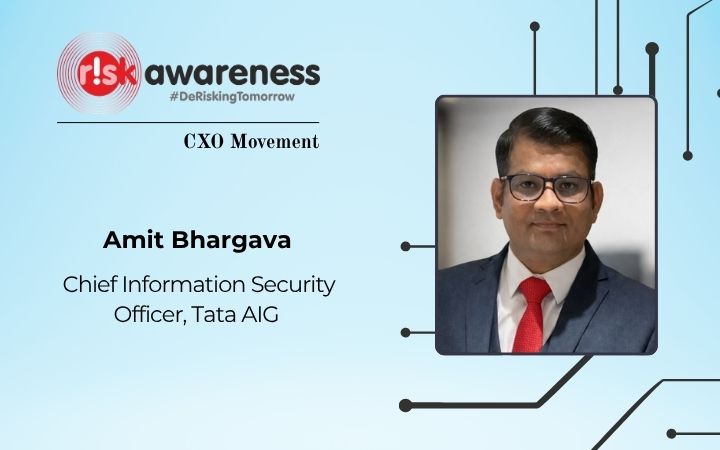
In a strategic move underscoring the growing importance of cybersecurity in financial services, Tata AIG has appointed Amit Bhargava as its Chief Information Security Officer (CISO). The appointment reflects the insurer’s continued focus on strengthening cyber resilience, enhancing risk management frameworks, and securing its digital transformation journey.
Amit Bhargava brings with him extensive experience in information security, enterprise risk governance, and cybersecurity leadership. Over his career, he has led high-impact security initiatives across leading institutions including Axis Bank, Yes Bank, OakNorth, AU Small Finance Bank, and Union Bank. His expertise spans cyber risk management, data protection, regulatory compliance, incident response, and the development of robust security architectures aligned with evolving threat landscapes.
At Tata AIG, he will be responsible for leading the organisation’s cybersecurity strategy, working closely with business, technology, and risk teams. His mandate will include strengthening threat detection capabilities, ensuring regulatory alignment, safeguarding customer data, and enabling secure adoption of digital initiatives across the enterprise.
Commenting on his new role, Amit Bhargava noted that cybersecurity today extends beyond traditional controls and is fundamentally about building trust and enabling resilient business operations in a digital-first environment. He also acknowledged the role of cross-functional teams in strengthening cyber defence mechanisms and expressed his commitment to advancing Tata AIG’s security posture.
The appointment comes at a time when the insurance and broader financial services sector is witnessing accelerated digital adoption, increasing the complexity of cyber threats and regulatory expectations. Organisations are now required to embed security into core business strategy rather than treat it as a peripheral function.
From a Riskawareness perspective, as cyber threats evolve from IT disruptions to enterprise-wide risk events, leadership appointments such as this signal a shift towards proactive cyber risk governance. For insurers, cybersecurity is no longer a defensive layer but a strategic enabler of trust, regulatory alignment, and sustainable digital growth.