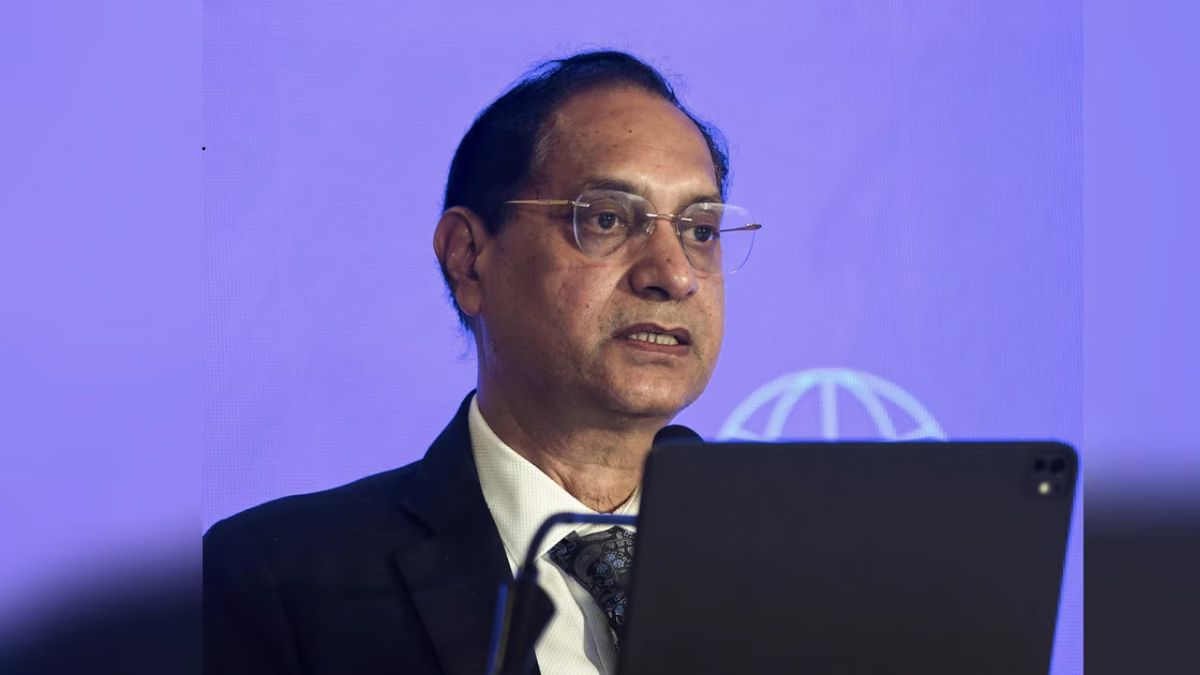







In an evolving financial ecosystem, regulatory intent often serves as a barometer of future market resilience. The Securities and Exchange Board of India’s (SEBI) latest announcement to boost institutional participation in the country’s commodity and derivatives markets— signals not just market expansion, but a structural recalibration of India’s financial depth. The inclusion of banks, pension funds, and other large institutional investors in these segments could transform liquidity dynamics, hedging efficiency, and the overall risk-management architecture that underpins Indian finance.
This move aligns with a broader reform trajectory that India’s regulators have been charting: strengthening the connective tissue between markets, institutional investors and systemic stability. For SEBI, the timing is deliberate. With the Reserve Bank of India (RBI) recently liberalizing acquisition financing and the government allowing 100% FDI in insurance, India’s financial ecosystem is being prepared for a deeper, more diversified institutional footprint. Together, these decisions represent the scaffolding of a more globally integrated, risk-aware marketplace.
Liquidity, Depth, and Market Confidence
Commodity exchanges and intermediaries such as futures brokers, settlement agencies and derivative clearing houses stand to benefit directly from the proposed expansion. Greater institutional participation invariably improves liquidity and narrows spreads, encouraging new product innovation and risk-transfer mechanisms. Agricultural and non-agricultural commodities, long prone to volatility and seasonal distortions, may now attract more sophisticated hedging strategies from corporate treasuries, banks and even mutual funds seeking diversification.
The psychological signal to the market is equally important. Institutions lend credibility and scale; their participation validates market maturity. As pension funds and banks deploy capital into commodity and bond derivatives, India moves closer to bridging the asymmetry that has long existed between its equity markets – robust, liquid and well-regulated – and its still-fragmented commodity ecosystem. The presence of these investors can anchor prices, enhance discovery and attract a new breed of financial products tailored for risk mitigation.
Risk Management as a Systemic Enabler
Beyond market depth, SEBI’s decision underscores a fundamental truth: liquidity without discipline breeds fragility. Institutional investors, by virtue of their governance and compliance obligations, introduce higher standards of transparency and risk assessment. Their entry could enforce better disclosure practices among exchanges, foster stricter counterparty risk controls and elevate the quality of credit risk management within the broader commodity trading ecosystem.
For India’s corporates, this evolution may finally normalize the use of hedging as a strategic tool rather than a reactive afterthought. Today, only a small fraction of Indian businesses systematically hedges input costs or currency exposures. Deeper institutional markets can catalyse a cultural shift, where risk management becomes as integral to boardroom discussion as revenue growth or cost optimization.
Aligning Regulatory Momentum with Global Practice
Globally, institutional deepening has proven to be a double-edged sword, amplifying liquidity but also raising questions around systemic interlinkages. SEBI’s challenge will be to ensure that India avoids the pitfalls of over-financialization. Commodity derivatives must remain grounded in their economic purpose: enabling producers, traders and consumers to manage price risk, not turning into speculative playgrounds detached from real-world fundamentals.
The regulator’s track record suggests prudence. Its progressive rollout of new derivative products, restrictions on excessive leverage and alignment with global standards such as IOSCO principles have positioned India’s markets as credible and forward-looking. The current initiative extends that philosophy, encouraging institutional capital while embedding guardrails to ensure sustainability.
A Broader Regulatory Convergence
SEBI’s action also fits within a wider institutional symphony. The RBI’s moves on acquisition financing and the government’s nod to full FDI in insurance both speak to a shared vision: channelling long-term capital into productive financial instruments, supported by robust risk-transfer infrastructure.
Insurance companies, with deeper foreign participation, will bring global underwriting expertise. Banks and pension funds, with clearer regulatory latitude, will deploy balance-sheet strength into market instruments. Together, these flows can help India manage capital efficiency and systemic stability in tandem.
As India’s financial architecture matures, market depth must be matched by market discipline. The real test for SEBI’s initiative will lie not in the first surge of trading volumes, but in how effectively these reforms build a more resilient risk-management ecosystem. If executed with care, institutional participation could transform India’s commodities and derivatives markets from under-utilized hedging tools into pillars of economic stability, mirroring the sophistication seen in advanced markets.
The outcome, therefore, extends beyond exchange floors. It touches every corporate treasurer, every insurer pricing risk and every policymaker calibrating growth with stability. In an era where uncertainty is the only constant, SEBI’s push is not just about deepening markets, it is about deepening confidence.